



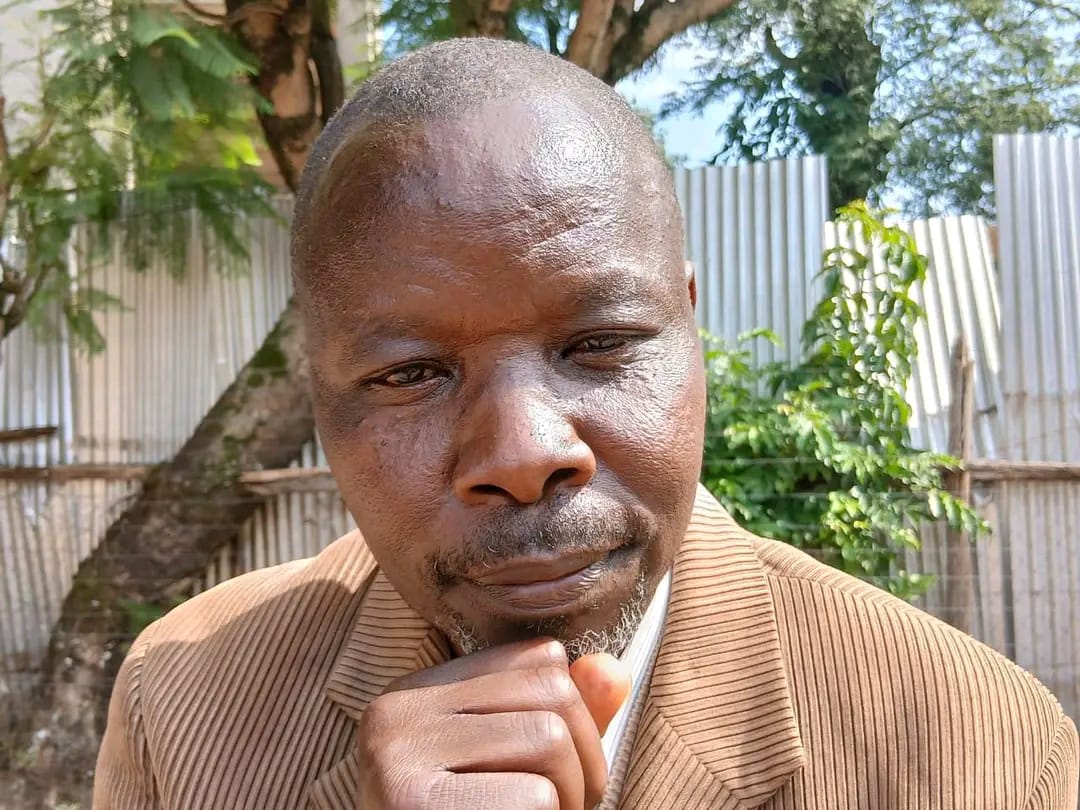
Duncan Waswa- Bungoma
As Kenya’s political landscape begins to shift ahead of the 2027 general elections, conversations around ethnic unity and regional representation are gaining momentum. One community at the center of this realignment debate is the Luhya, a populous and historically fragmented group whose political influence has often been diluted by internal divisions.
Speaking at a community dialogue forum in Bungoma, the Secretary General of the Luhya Unity Restoration Forum,Eng Daniel Mukhonge, issued a rallying call for political unity among Luhya leaders.
Mukhonge emphasized that the region must stop fragmenting itself along tribal and county lines and instead adopt a united political front that can influence national decision-making.
“For years, we have allowed ourselves to be divided by political parties that do not prioritize our interests,” Mukhonge said. “Now is the time to form a regional political vehicle—one that carries the true aspirations of our people.”
Mukhonge pointed out that despite their large numbers, Luhyas have continuously failed to benefit significantly from the national cake due to lack of cohesion.
With over five million registered voters spread across counties such as Kakamega, Bungoma, Vihiga, Busia, and parts of Trans Nzoia and Nairobi, the Luhya community is one of Kenya’s largest voting blocs. Yet, it has never produced a president or held a strong negotiating position in post-election governments.
“We have the numbers, but we’ve never used them as a unified force. That’s why we keep complaining after every election that our people were left out of major government appointments and development plans,” he lamented.
According to Mukhonge, this scenario will persist unless the community changes how it engages in national politics—especially during elections.
To change this, Mukhonge is calling for a radical shift in voting behavior among Luhya voters. He is urging them to move away from blindly following national party agendas and instead vote strategically as a bloc to demand tangible returns.
“We must learn from other communities like the Kalenjin and Kikuyu, who have historically rallied behind common political directions and in turn secured key government positions,” he said.
Mukhonge proposed the creation of a regional political coalition or party to act as a bargaining tool during national negotiations, especially in the run-up to 2027.
“Without a united front, we will always be used as ladder-holders to power but never get to the top ourselves,” he added.
Signs of a New Political Wave
Mukhonge’s sentiments are emerging at a time when younger and more progressive leaders from Western Kenya are starting to form development-oriented alliances that transcend party lines. Governors, senators, and members of parliament from the region have recently shown signs of working together on key issues such as infrastructure, youth empowerment, and healthcare.
Political analysts believe this could be the beginning of a new political awakening in the Luhya community, but caution that the journey will require more than just talk.
“For the Luhya unity dream to become a reality, leaders must be willing to sacrifice personal ambitions and embrace collective strategy,” says Philip Wekesa a political analyst based in Bungoma.
“What we need is political discipline, negotiation skill, and above all, a common vision.”
Wekesa warns that without a focused plan, the calls for unity could be hijacked by selfish individuals looking for short-term gains.
“It’s not just about forming a party—it’s about building a lasting political institution that can shape Kenya’s leadership for years to come,” he added.
With less than two years to the next general election, political activity is already underway in many parts of the country. For the Luhya community, the coming months may prove crucial in determining whether they can finally break free from the cycle of internal competition and fragmentation.
Mukhonge believes that if a united strategy is adopted now, the Luhya nation could emerge as a formidable force in 2027—one capable of producing a deputy president, prime cabinet secretary, or even the president.
“Unity is not just a slogan; it is a pathway to power and progress,” he stated. “If we speak with one voice, we can no longer be ignored. But if we remain divided, we will continue to watch others lead while we follow.”
Kenya’s history is rich with examples of communities that rose to national prominence through strategic political organization. For the Luhya community, the current wave of realignment offers yet another chance to reshape its destiny. Whether that opportunity will be seized depends largely on how the region’s leaders and citizens respond to the call for unity.
As 2027 draws closer, the question remains: will the Luhyas finally unite, or will they remain a sleeping giant—mighty in numbers, but missing from power?

