



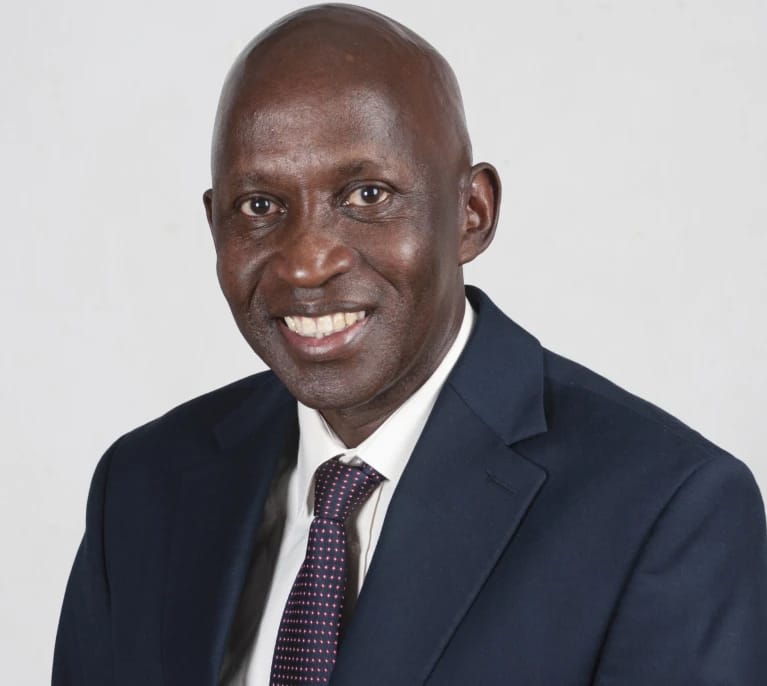
By Reuben Olita
Top world researcher Prof Olubayi Olubayi has said the absence of African universities among the world’s best explains Africa’s general inability to industrialize and to exploit its own natural resources appropriately for sustainable development.
In an invitation by Nature, the world’s number two science journal, to
share his ideas on education strategies for Africa’s industrialization, Prof Olubayi said it’s regrettable that no African universities are among the top 200 as rated by the three major global rankings of world universities.
“Although imperfect, these rankings are used as a measure of quality of research, innovation, selectivity, learning, and human capital output,” Prof Olubayi noted.
However, he added that a change in public universities and funding strategies can enable African countries to deliver vastly superior research and innovation outcomes within national budgets.
He went on: ” To develop, industrialize, and contribute to poverty reduction, African countries must emulate the differentiated and hierarchical higher education ecosystems of the developed countries.”
Olubayi said almost all the world’s top 200 universities are part of dual-track tiered educational ecosystems in which there are highly selective elite research-intensive institutions at the apex and average quality universities at the base of the pyramid.
The best-known examples of the dual-track higher education ecosystems are in the United States, United Kingdom, India, Canada, Australia, and China,” he noted .
Prof Olubayi added that many rapidly developing countries such as Israel, South Korea, Singapore, Malaysia and Saudi Arabia have borrowed this dual-track tiered approach that allocates the highest quality researchers, teachers, infrastructure and financial resources to the education of the most gifted and most talented citizens in their elite institutions and innovation clusters.
Olubayi noted that highly selective research-intensive elite universities will continue to be successful in a way that current African centres of excellence may never be.
” This is partly because the designated centres of excellence are embedded within poorly funded universities. Thus, many African centres of excellence have been unable to move any of their host universities into even the global top 400.
Africa needs to think carefully and strategically about universities that provide human capital for industrialization and development just as she selects sports teams.
Acountry like Nigeria, he noted, ranked 43 (among the world’s FIFA top 100) in men’s football, should use the same strategy in thinking about its higher education ecosystem. Nigeria should select one of its 135 public universities and convert it to an elite equivalent of the Indian Institute of Science (IIS), the UK’s Oxford University, or Harvard University in the US, or South Korea’s Seoul National University,” he noted.
Prof Olubayi suggested that the way forward is
investing in at least one highly selective elite research-intensive university can be done within existing national budgets. This could be by changing the funding formula by allocating 20% of available university resources for the education of the most gifted and most talented 1% of the student population, drawn from all regions and all socio-economic strata of the country on the basis of merit.
Some scholars have also suggested that Africa should have its own ranking of universities that is separate from the current three dominant rankings.
This separation of rankings is dangerous because it assumes that although Africa can compete in sports, it can’t compete in academics, research, and innovation. And it assumes, wrongly, that science and technology can be racialized, that there is a law of gravity for Africans, or a cause of malaria that is different for Africans than for Asians and Europeans.
Africa’s history shows the continent was not always at the bottom of the world’s knowledge hierarchy. There can’t be separate African or Asian or European criteria for evaluating science, technology, and research. To contribute to global outputs effectively, African countries should change strategy and establish one elite research-intensive university per country.
Olubayi Olubayi’s research on global education policies and practices is supported by the Goodluck Jonathan Foundation.

