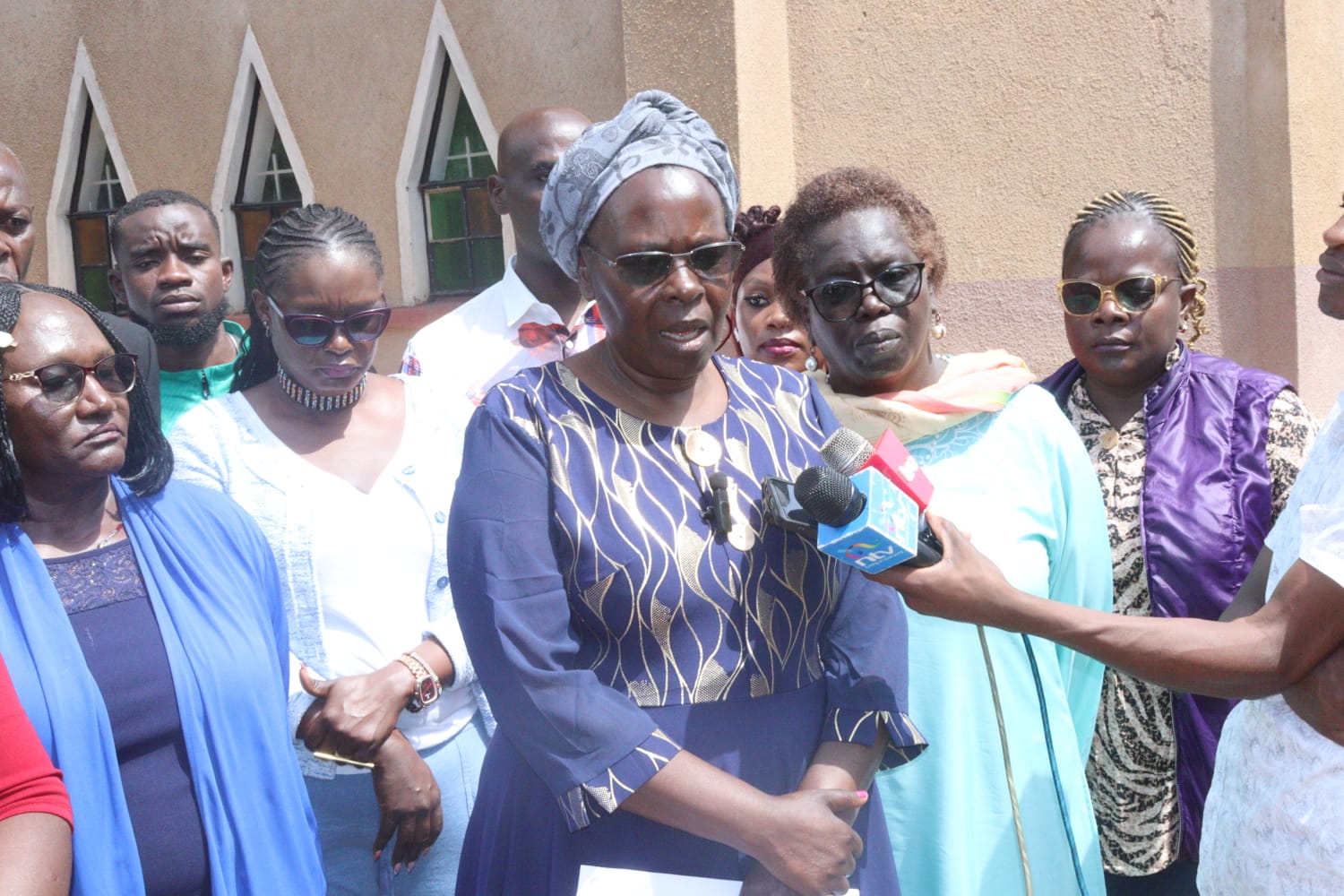
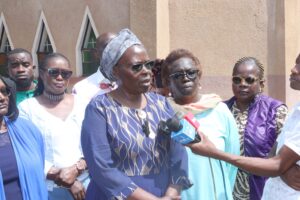
SCCOdev team lead Tecla Namachanja addressing the press on peace ahead of the 2027 general elections.
A Non Governmental organization, The Shallom Centre for Counselling and Development (SCCoDev) conducted a peace meeting meant to sensitize the public to preach peace ahead of the 2027 general elections.
The study dubbed “A Tale of Electoral Violence in Kenya: National Trends, Drivers and Lessons from Bungoma County” The study’s findings were presented to state and non-state officials from the National Government, County Government, Faith-Based Organizations, Civil Society Organizations, and community representatives.
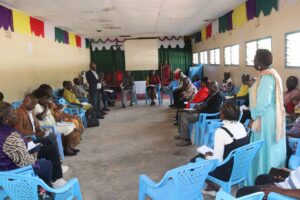
Addressing the press following a two day workshop at the St. Chispine Anglican Church hall on 17th and 18th September 2026, The Shallom Centre for Counselling and Development Team lead Tecla Namachanja stated that peace is crucial ahead of the general elections.
A total of forty five key stakeholders attended the dissemination meeting and participated actively.
“Appreciating the fact that Bungoma County is largely peaceful, this Peace is mainly the absence of open violence rather than the full resolution of the grievances that divide communities,” she said.
Ms Namachanja added that “We are afraid that beneath this calm lie grievances, fears and vulnerabilities that could be activated by electoral competition,”.
She affirmed that Informed that early warning signs are not just mere statistics but behind every percentage lies individuals families, memories and communities. We appeal to the Political class, young people, mothers, elders, religious leaders, community leaders, and all citizen of Bungoma County to protect the Peace that exists today.
“The big question that remains in our minds is whether to wait for violence to erupt before we act, or will we protect the peace we have while there is still time?” She posed.
Statistics show that 63.7 percent identified fierce political competition as a major conflict catalyst while 61.9 percent identified historical land disputes.
37.2% identified clan rivalries.
She added that despite being Passionate about the gains of Devolution, among them closer access to public administration, development, employment opportunities, procurement opportunities etc. We echo that County resources belong to the people and that they must never become a reason for communities to turn against one another.
“Transparent, inclusive and accountable governance is therefore an important part of violence prevention.
SCCOdev team lead Tecla Namachanja addressing the press on peace ahead of the 2027 general elections.
Political differences are temporary, elections come and go, and leaders change. But our communities remain, and we must continue living together as neighbours. No political position is worth a life. No election is worth destroying a family, a livelihood or a community,” she said.
A young person’s poverty should never become another person’s opportunity to recruit them into violence.
We call for greater investment in livelihoods, vocational opportunities, enterprise development, civic participation and youth leadership.
“Let us choose the future we want to hand to our children,
We therefore call on all stakeholders to act before tensions escalate—through dialogue, early warning, Active Nonviolence, responsible political engagement, youth empowerment and healing of unresolved grievances,” she said.
Let us act while there is still peace to protect.
Bungoma County must not become a statistic of electoral violence. It must remain a home where political differences can be expressed without fear, and where every citizen can look to the future with hope.
We commit ourselves to:
1. Strengthening early warning and early response. Communities must have safe channels through which emerging tensions can be reported, verified and addressed before they become violence.
2. Promoting Active Nonviolence. Communities should be equipped with practical skills for dialogue, de-escalation, mediation and peaceful action.
3. Protecting the integrity of elections. Vote buying, intimidation and other practices that undermine peaceful participation must be confronted through appropriate lawful mechanisms.
4. Building youth resilience and opportunity. Young people must be supported as peacebuilders, civic leaders and agents of positive change—not recruited into violence.
5. Countering digital hate and misinformation. Peacebuilding must enter the digital spaces where citizens increasingly receive information, debate politics and form perceptions of one another.
6. Addressing historical grievances. Land, clan, resource and historical grievances cannot simply be postponed until after elections. They require sustained dialogue and reconciliation.
7. Investing in healing. Where communities carry memories and wounds from previous violence, trauma healing and psychosocial support must form part of peacebuilding.
LET US PROTECT THE PEACE WE HAVE AND BUILD THE PEACE WE WANT.