



By Joan Cheruiyot
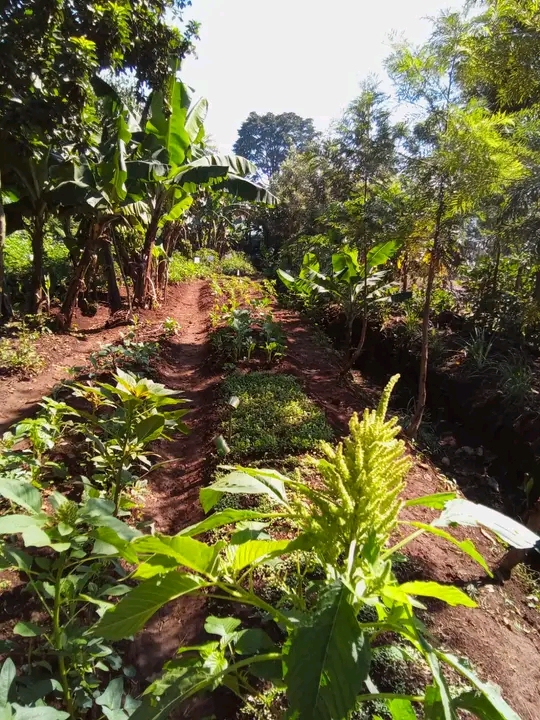
What was once a flower bed at Sega Girls Primary and Junior School in Siaya County is now a thriving vegetable garden supplying food to learners and reducing the school’s expenditure on meals.
On World Environment Day, learners, teachers, parents and community members gathered at the school to celebrate a transformation that has gone beyond tree planting and environmental conservation. The institution is among a growing number of schools embracing agroecology to improve nutrition, strengthen school feeding programmes and equip learners with practical agricultural skills.
According to Head Teacher sister Mildred Akinyi, the school’s journey began through a partnership with Schools and Colleges Permaculture (SCOPE) Kenya, which introduced sustainable farming practices and encouraged schools to utilize available space for food production.
“We started by planting fruit trees because we wanted learners to benefit from them in the future. Furthermore converted our flower beds into vegetable gardens where we now grow onions, vegetables and other food crops,” said Akinyi.
The school has embraced SCOPE’s philosophy of promoting indigenous African foods under the slogan “My Food is African.” Through organic farming methods, learners are taught to grow food without relying heavily on synthetic fertilizers and pesticides.
Despite operating on limited land, the school has established productive gardens, poultry units, duck projects and rabbit-rearing initiatives that contribute to the school’s food supply.
“We are now able to produce most of our vegetables, which has significantly reduced our food budget. I can confidently say we meet about 85 per cent of our vegetable needs from our own gardens,” the headteacher said.
Beyond reducing food costs, the programme has transformed learners’ attitudes towards agriculture.
“Many of our students come from urban backgrounds and had never participated in farming activities before. Today they are excited about gardening and animal husbandry. They are learning that agriculture can be both productive and enjoyable,” she added.
The school’s success has also been driven by strong parental involvement. From the beginning, parents helped prepare the gardens and have continued supporting the programme through training and community activities.
For many parents, the benefits have extended far beyond the school compound.
One parent from Ugolwe Primary School says the agroecology programme has improved household food security and created new sources of income.
“Everything we learn at school, we practice at home. We formed groups and started growing vegetables, bananas, fruits and indigenous crops. Today we have enough food for our families and we also sell surplus produce at the market,” she explained.
The parent says the programme has taught members how to save seeds, make compost, conserve water and grow crops without depending on expensive farm inputs.
“We no longer buy most of our seeds from the market because we harvest and preserve our own. We have learned how to make compost using locally available materials and how to manage water efficiently in our farms,” she said.
The benefits have also strengthened community solidarity. Families with surplus harvests often share vegetables with elderly and vulnerable members of the community who may not be able to farm for themselves.
“When we harvest more than we need, we take vegetables to elderly people and those who are sick. The project has taught us that food should bring communities together,” she added.
While parents are transforming their farms, students are becoming champions of sustainable agriculture in their schools.
At St.Anne Sega Girls primary and Junior School, members of the Agriculture Club proudly manage a rabbit-rearing project .
Student Jane Zawadi explained that learners are responsible for feeding, monitoring and caring for different rabbit breeds while learning practical livestock management skills.
The rabbits also contribute to crop production through vermiculture, a process where worms break down rabbit waste into nutrient-rich organic fertilizer.
“After the rabbits feed, the waste is collected and mixed with worms to produce liquid fertilizer. We dilute it with water and use it on crops as fertilizer and pest control,” Jane explained.
The school’s Agriculture Club is divided into different sections, including rabbit farming, duck rearing, crop production and livestock management, ensuring that learners gain hands-on experience across various agricultural enterprises.
Another student, Monica, says the programme has taught learners to maximize available space by growing crops along classroom pathways and in designated gardens.
“We grow kale, herbs such as rosemary ,turmeric, ginger and even sunflowers whose seeds are processed into cooking oil. The produce is used in the school kitchen and helps improve nutrition,” she said.
Students also learn how to make natural pesticides and foliar fertilizers using locally available materials, knowledge they later apply in their homes and communities.
The practical approach has made learning more engaging and helped students appreciate agriculture as a viable livelihood option.
Behind many of these success stories is SCOPE Kenya, an organisation promoting agroecology in schools and communities across Nyanza and Western Kenya.
According to John Macharia of SCOPE Kenya, the organisation works with learners, teachers and parents to promote nature-friendly farming practices that improve food security while conserving the environment.
“Our goal is to empower communities to grow healthy and nutritious food while taking care of the environment. We believe schools are the best entry point because they bring together learners, teachers and parents,” he said.
Macharia explained that parents undergo a 14-day practical training programme before forming self-help groups that continue implementing agroecological practices within their communities.
The organisation currently works with eight schools in the Nyanza region and six schools in Western Kenya.
Macharia says the programme was introduced in the two regions to address specific food security challenges. In Western Kenya, many households rely heavily on sugarcane farming, while in Nyanza, communities often depend on fishing and maize production.
“We encourage families to diversify by growing climate-resilient crops such as cassava, sweet potatoes, beans, millet and indigenous vegetables. This helps improve nutrition, food security and climate change,”he said.
The programme also emphasizes sustainability through seed saving, composting, organic farming, water conservation and biodiversity protection.
As schools and communities continue embracing agroecology, the initiative is proving that food security does not depend on large tracts of land or expensive inputs. Instead, it depends on knowledge, commitment and the willingness to work together.
From transformed flower beds at Sega Girls to thriving household gardens in Ugolwe and innovative student projects at St. Anne Sega Girls, agroecology is putting food on the table, improving livelihoods and cultivating a generation that sees agriculture not as a last resort, but as a pathway to a healthier and more sustainable future.
How Agroecology Is transforming schools and communities in Nyanza region and Western Kenya
By Joan Cheruiyot
What was once a flower bed at Sega Girls Primary and Junior School in Siaya County is now a thriving vegetable garden supplying food to learners and reducing the school’s expenditure on meals.
On World Environment Day, learners, teachers, parents and community members gathered at the school to celebrate a transformation that has gone beyond tree planting and environmental conservation. The institution is among a growing number of schools embracing agroecology to improve nutrition, strengthen school feeding programmes and equip learners with practical agricultural skills.
According to Head Teacher sister Mildred Akinyi, the school’s journey began through a partnership with Schools and Colleges Permaculture (SCOPE) Kenya, which introduced sustainable farming practices and encouraged schools to utilize available space for food production.
“We started by planting fruit trees because we wanted learners to benefit from them in the future. Furthermore converted our flower beds into vegetable gardens where we now grow onions, vegetables and other food crops,” said Akinyi.
The school has embraced SCOPE’s philosophy of promoting indigenous African foods under the slogan “My Food is African.” Through organic farming methods, learners are taught to grow food without relying heavily on synthetic fertilizers and pesticides.
Despite operating on limited land, the school has established productive gardens, poultry units, duck projects and rabbit-rearing initiatives that contribute to the school’s food supply.
“We are now able to produce most of our vegetables, which has significantly reduced our food budget. I can confidently say we meet about 85 per cent of our vegetable needs from our own gardens,” the headteacher said.
Beyond reducing food costs, the programme has transformed learners’ attitudes towards agriculture.
“Many of our students come from urban backgrounds and had never participated in farming activities before. Today they are excited about gardening and animal husbandry. They are learning that agriculture can be both productive and enjoyable,” she added.
The school’s success has also been driven by strong parental involvement. From the beginning, parents helped prepare the gardens and have continued supporting the programme through training and community activities.
For many parents, the benefits have extended far beyond the school compound.
One parent from Ugolwe Primary School says the agroecology programme has improved household food security and created new sources of income.
“Everything we learn at school, we practice at home. We formed groups and started growing vegetables, bananas, fruits and indigenous crops. Today we have enough food for our families and we also sell surplus produce at the market,” she explained.
The parent says the programme has taught members how to save seeds, make compost, conserve water and grow crops without depending on expensive farm inputs.
“We no longer buy most of our seeds from the market because we harvest and preserve our own. We have learned how to make compost using locally available materials and how to manage water efficiently in our farms,” she said.
The benefits have also strengthened community solidarity. Families with surplus harvests often share vegetables with elderly and vulnerable members of the community who may not be able to farm for themselves.
“When we harvest more than we need, we take vegetables to elderly people and those who are sick. The project has taught us that food should bring communities together,” she added.
While parents are transforming their farms, students are becoming champions of sustainable agriculture in their schools.
At St.Anne Sega Girls primary and Junior School, members of the Agriculture Club proudly manage a rabbit-rearing project .
Student Jane Zawadi explained that learners are responsible for feeding, monitoring and caring for different rabbit breeds while learning practical livestock management skills.
The rabbits also contribute to crop production through vermiculture, a process where worms break down rabbit waste into nutrient-rich organic fertilizer.
“After the rabbits feed, the waste is collected and mixed with worms to produce liquid fertilizer. We dilute it with water and use it on crops as fertilizer and pest control,” Jane explained.
The school’s Agriculture Club is divided into different sections, including rabbit farming, duck rearing, crop production and livestock management, ensuring that learners gain hands-on experience across various agricultural enterprises.
Another student, Monica, says the programme has taught learners to maximize available space by growing crops along classroom pathways and in designated gardens.
“We grow kale, herbs such as rosemary ,turmeric, ginger and even sunflowers whose seeds are processed into cooking oil. The produce is used in the school kitchen and helps improve nutrition,” she said.
Students also learn how to make natural pesticides and foliar fertilizers using locally available materials, knowledge they later apply in their homes and communities.
The practical approach has made learning more engaging and helped students appreciate agriculture as a viable livelihood option.
Behind many of these success stories is SCOPE Kenya, an organisation promoting agroecology in schools and communities across Nyanza and Western Kenya.
According to John Macharia of SCOPE Kenya, the organisation works with learners, teachers and parents to promote nature-friendly farming practices that improve food security while conserving the environment.
“Our goal is to empower communities to grow healthy and nutritious food while taking care of the environment. We believe schools are the best entry point because they bring together learners, teachers and parents,” he said.
Macharia explained that parents undergo a 14-day practical training programme before forming self-help groups that continue implementing agroecological practices within their communities.
The organisation currently works with eight schools in the Nyanza region and six schools in Western Kenya.
Macharia says the programme was introduced in the two regions to address specific food security challenges. In Western Kenya, many households rely heavily on sugarcane farming, while in Nyanza, communities often depend on fishing and maize production.
“We encourage families to diversify by growing climate-resilient crops such as cassava, sweet potatoes, beans, millet and indigenous vegetables. This helps improve nutrition, food security and climate change,”he said.
The programme also emphasizes sustainability through seed saving, composting, organic farming, water conservation and biodiversity protection.
As schools and communities continue embracing agroecology, the initiative is proving that food security does not depend on large tracts of land or expensive inputs. Instead, it depends on knowledge, commitment and the willingness to work together.
From transformed flower beds at Sega Girls to thriving household gardens in Ugolwe and innovative student projects at St. Anne Sega Girls, agroecology is putting food on the table, improving livelihoods and cultivating a generation that sees agriculture not as a last resort, but as a pathway to a healthier and more sustainable future.
How Agroecology Is transforming schools and communities in Nyanza region and Western Kenya
By Joan Cheruiyot
What was once a flower bed at Sega Girls Primary and Junior School in Siaya County is now a thriving vegetable garden supplying food to learners and reducing the school’s expenditure on meals.
On World Environment Day, learners, teachers, parents and community members gathered at the school to celebrate a transformation that has gone beyond tree planting and environmental conservation. The institution is among a growing number of schools embracing agroecology to improve nutrition, strengthen school feeding programmes and equip learners with practical agricultural skills.
According to Head Teacher sister Mildred Akinyi, the school’s journey began through a partnership with Schools and Colleges Permaculture (SCOPE) Kenya, which introduced sustainable farming practices and encouraged schools to utilize available space for food production.
“We started by planting fruit trees because we wanted learners to benefit from them in the future. Furthermore converted our flower beds into vegetable gardens where we now grow onions, vegetables and other food crops,” said Akinyi.
The school has embraced SCOPE’s philosophy of promoting indigenous African foods under the slogan “My Food is African.” Through organic farming methods, learners are taught to grow food without relying heavily on synthetic fertilizers and pesticides.
Despite operating on limited land, the school has established productive gardens, poultry units, duck projects and rabbit-rearing initiatives that contribute to the school’s food supply.
“We are now able to produce most of our vegetables, which has significantly reduced our food budget. I can confidently say we meet about 85 per cent of our vegetable needs from our own gardens,” the headteacher said.
Beyond reducing food costs, the programme has transformed learners’ attitudes towards agriculture.
“Many of our students come from urban backgrounds and had never participated in farming activities before. Today they are excited about gardening and animal husbandry. They are learning that agriculture can be both productive and enjoyable,” she added.
The school’s success has also been driven by strong parental involvement. From the beginning, parents helped prepare the gardens and have continued supporting the programme through training and community activities.
For many parents, the benefits have extended far beyond the school compound.
One parent from Ugolwe Primary School says the agroecology programme has improved household food security and created new sources of income.
“Everything we learn at school, we practice at home. We formed groups and started growing vegetables, bananas, fruits and indigenous crops. Today we have enough food for our families and we also sell surplus produce at the market,” she explained.
The parent says the programme has taught members how to save seeds, make compost, conserve water and grow crops without depending on expensive farm inputs.
“We no longer buy most of our seeds from the market because we harvest and preserve our own. We have learned how to make compost using locally available materials and how to manage water efficiently in our farms,” she said.
The benefits have also strengthened community solidarity. Families with surplus harvests often share vegetables with elderly and vulnerable members of the community who may not be able to farm for themselves.
“When we harvest more than we need, we take vegetables to elderly people and those who are sick. The project has taught us that food should bring communities together,” she added.
While parents are transforming their farms, students are becoming champions of sustainable agriculture in their schools.
At St.Anne Sega Girls primary and Junior School, members of the Agriculture Club proudly manage a rabbit-rearing project .
Student Jane Zawadi explained that learners are responsible for feeding, monitoring and caring for different rabbit breeds while learning practical livestock management skills.
The rabbits also contribute to crop production through vermiculture, a process where worms break down rabbit waste into nutrient-rich organic fertilizer.
“After the rabbits feed, the waste is collected and mixed with worms to produce liquid fertilizer. We dilute it with water and use it on crops as fertilizer and pest control,” Jane explained.
The school’s Agriculture Club is divided into different sections, including rabbit farming, duck rearing, crop production and livestock management, ensuring that learners gain hands-on experience across various agricultural enterprises.
Another student, Monica, says the programme has taught learners to maximize available space by growing crops along classroom pathways and in designated gardens.
“We grow kale, herbs such as rosemary ,turmeric, ginger and even sunflowers whose seeds are processed into cooking oil. The produce is used in the school kitchen and helps improve nutrition,” she said.
Students also learn how to make natural pesticides and foliar fertilizers using locally available materials, knowledge they later apply in their homes and communities.
The practical approach has made learning more engaging and helped students appreciate agriculture as a viable livelihood option.
Behind many of these success stories is SCOPE Kenya, an organisation promoting agroecology in schools and communities across Nyanza and Western Kenya.
According to John Macharia of SCOPE Kenya, the organisation works with learners, teachers and parents to promote nature-friendly farming practices that improve food security while conserving the environment.
“Our goal is to empower communities to grow healthy and nutritious food while taking care of the environment. We believe schools are the best entry point because they bring together learners, teachers and parents,” he said.
Macharia explained that parents undergo a 14-day practical training programme before forming self-help groups that continue implementing agroecological practices within their communities.
The organisation currently works with eight schools in the Nyanza region and six schools in Western Kenya.
Macharia says the programme was introduced in the two regions to address specific food security challenges. In Western Kenya, many households rely heavily on sugarcane farming, while in Nyanza, communities often depend on fishing and maize production.
“We encourage families to diversify by growing climate-resilient crops such as cassava, sweet potatoes, beans, millet and indigenous vegetables. This helps improve nutrition, food security and climate change,”he said.
The programme also emphasizes sustainability through seed saving, composting, organic farming, water conservation and biodiversity protection.
As schools and communities continue embracing agroecology, the initiative is proving that food security does not depend on large tracts of land or expensive inputs. Instead, it depends on knowledge, commitment and the willingness to work together.
From transformed flower beds at Sega Girls to thriving household gardens in Ugolwe and innovative student projects at St. Anne Sega Girls, agroecology is putting food on the table, improving livelihoods and cultivating a generation that sees agriculture not as a last resort, but as a pathway to a healthier and more sustainable future.

