



BY OUR REPORTER
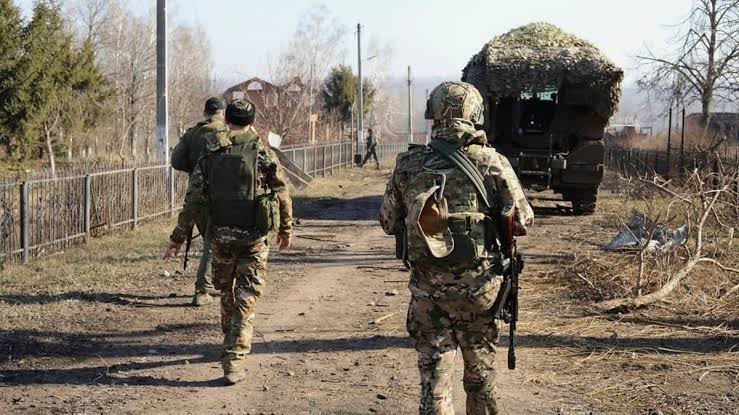
It has been established that approximately 82 Kenyans are currently affected in Russian military operations, many injured, some dead, and others stranded far from the far from home country after being lured into what they believed were legitimate opportunities abroad.
According to the Embassy’s compiled list, the Kenyans are stationed across multiple locations including Rostov-On-Don, Belgorod, Istra (Wagner Military Base), Saint Petersburg, and others yet to be established destinations.
In Belgorod alone, 20 Kenyans were identified with one deceased while others were in camp, while Istra hosts 29 with three rescued while the rest in camp, and Saint Petersburg has 26 with four repatriated some with injuries with some with amputated legs and the rest were deployed. Two Kenyans are stationed in Rostov-On-Don, while six are at unspecified locations.
Tragically, the letter also confirmed the death of one Kenyan, Willy Muniu Macharia, at a military base in Belgorod. Several others are hospitalized with injuries sustained during deployment.
The Embassy expressed concern over the methods used to recruit and lure young Kenyans for foreign military service, urging the State Department of Diaspora Affairs to ensure awareness campaigns to educate citizens seeking work abroad.
“It appears that young Kenyans continue to be lured by unscrupulous agents to travel to Russia and unknowingly find themselves in the Russian military operation. State Department of Diaspora need to undertake awareness campaigns on this subject to enlighten Kenyans seeking for work opportunities abroad to be more vigilant and seek more information about the assignment destinations through the Ministry and respective Kenyan Missions,” said Amb. Dy. Peter M. Mathuki, in a letter to the MFA Nairobi.
The full list of Kenyans currently in Russian military operations includes names, contact numbers, dates of entry, camp locations, and their status, reflecting a mix of deployed personnel, hospitalized individuals, and rescued or repatriated citizens.
In Belgorod, at the Novaya Tavolzhanka camp, about 20 Kenyans have been stationed since August 2025. Among them are Gilbert Yanoh and Daniel Mundia, both reachable on mobile numbers and respectively. Other recruits in the camp include Paul Wanjiru, Alexander Chepkurui,Dan Masanga, Anthony Magoma, Steven Wamalwa, Nicholas Keino,Job Makera, Seif Pamba, and Mark Mwangi. Further additions to the camp roster include George Kigia, Francis Ndarua, Anthony Kihika, A David Simiyu, Joseph Leshinka, Wesley Nyabuti, Erastus, and Benson Osomo, who was hospitalized. Sadly, Willy Muniu Macharia passed away while at this camp. The camp functions as a base where recruits are undergoing training and operational preparations.
Istra, Wagner Military Base – 80 km from Moscow. At the Istra Wagner Military Base, a total of 29 Kenyans have been identified as part of the Russian military operations. Notably, Shaquille Wambo, Pius Mwika, and Derrick Njaga were rescued by the Kenyan Embassy in Moscow between September 12 and 16, 2025.
Other Kenyans remain in the camp, including Daniel Mburu Muringi, Antony Maina Ruhii, Mathew Mwasi Makelele, Nixon Onwonga A. Omwenga, Mugeka Nderitu Muriithi, Eddie Kimani Mungai,George Rimba Mwagona, Billal Masila Rumaida, Victor Mbuga Kinuthia, and Christopher Mwangi Macharia. Additional recruits in Istra include Kevin Kariuki Nduma, Victor Kabiru Njunge, Billy Graham Odhiambo, Wilson Okondo, Lamex Onsongo, Benedict Vundi Musee, Timothy Thuranira, Robert Ngeso Otieno, Nelson Ochieng, Dishon Kazee, Douglas Mwathi, James, Geoffrey Omimga, Titus Mwangi, Paul Chege, and Felix Rotich. These recruits are reportedly engaged in training and operational deployment preparation.
Saint Petersburg – 700 km from Moscow Saint Petersburg hosts 26 Kenyans in various conditions. Some, like Vincent Odhiambo Awiti and Wilson Mwaoka Mwanyalo, were repatriated to Kenya in September 2025 after sustaining injuries. Others remain hospitalized in the Moscow region, including Paul Mwaura Muthoni, who had a leg amputated, and Newton Maliro, who suffered fractures in his arm and leg. Robert Peterson, Paul Mutonye, and Erick Korinko are hospitalized in Lugansk with serious injuries, including fractures and shrapnel wounds. Deployed personnel in Saint Petersburg include Richard Okiri, Okwaro, Dishon Kazee, Naish, Seif Salim Pamba, Maxwell Maina, Thomas Shelby, Josephat Theuri, Stanley Mungai, David Shitanda Kuloba, Wangari Rouben Ndugu, Ismael Tariq Ahmed, Kariuki Samuel Maina, Orima Jobick Otieno, and Martin Ochieng. The camp is currently balancing medical care and deployment for these Kenyans.
Rostov-on-Don – 1,000 km from MoscowRostov-on-Don has two Kenyan recruits: Oscar Khagola Mutoka and Wesley Lugadiru Both are currently deployed as part of Russian military operations. Details on their specific roles remain limited, but they are reported to be actively involved in operations.
Unknown Locations: Six Kenyans remain in unknown locations, making it difficult to ascertain their current conditions. These include Evans Kiage, Collins Nyakundi, Boniface Mugo, John Mwangi Nduta, Ronald Nduta, and Ronald Obwaka. Their status and precise deployment locations have not been verified.
Mark Kariuki*, recently rescued from the Russian frontline, has revealed that he and thousands of other young Kenyans were recruited for jobs abroad through agencies claiming full government support. Karuiuki warned that while salaries of up to $10,000 were promised, many risked exploitation and misinformation.
“My friend and I were looking for a job and started visiting different agencies, but we were not lucky because we just wanted to get anything from the Gulf. Then we met Robert, a guy just sitting there, who approached us. And he told us ‘I have an agency that is recruiting Kenyans to go to Russia. You see, the agency is out here. The agencies are charging people money, but with a good heart, I know the youth are struggling, and I want to help them,’” Karuiuki said.
Karuiuki explained that the recruitment targeted young people for roles in meat processing, packaging, and cleaning. Agencies promised that travel, medical checks, and accommodation would be fully covered.
However, the reality was far from what he expected. Karuiuki described a confusing and disorganized process involving multiple office visits, medical assessments, and constant communication via WhatsApp groups with tens of thousands of potential recruits. Despite assurances, some recruits were reportedly threatened or intimidated to comply with the process.
“they video called some individual in Russia and they told us something that was not there, only when we reached there they told us they were forced to say that and that they were amputated,it was unbelievable” he told the nation.
In September detectives arrested a male Russian national, Mike Lyapin, who first came to Kenya on March 6, 2017 alleging to have a key role in the cartel undertaking the illegal and forceful recruitment of Kenyans to the Russian military.
In a letter dated September 30, 2025, the Ministry of Foreign and Diaspora Affairs expressed deep concern over the irregular recruitment of Kenyan nationals to serve in the Russian military, describing the practice as a violation of international law and a direct threat to the safety of citizens abroad.
In a letter addressed to the Embassy of the Russian Federation in Nairobi, the Ministry demanded urgent explanations regarding the extent of knowledge and involvement by Russian authorities in recruiting Kenyans for military service. The correspondence comes amid growing reports of young Kenyans being lured abroad under the pretext of tourism, business, or study, only to be coerced into armed conflict.
“The Government of Kenya categorically and unequivocally denounces this practice, which not only endangers the fundamental rights and safety of Kenyan citizens, but also contravenes international law and established norms prohibiting human trafficking and the recruitment of foreign nationals into armed conflict,” the letter read.
Martin Macharia Mburu, a young man from Ruaka, Kiambu, became the first officially confirmed Kenyan fatality in the war in Ukraine. He was killed Thursday on the Donetsk-Lyman frontline, according to sources in Kyiv.
Mburu had left Kenya less than 40 days ago, lured by promises of a driving job in Russia. Instead, he was reportedly recruited into the conflict, part of a growing trend of Kenyans misled into joining Russian forces.
According to details shared by a source from authorities in Kyiv, Ukraine Mburu left Kenya in late October, traveling via Sharjah to Moscow. He was promised a legitimate driving job with a decent salary.
However, upon arrival, he was reportedly coerced into signing a military contract in Russian — a language he did not understand — before being sent to the frontlines in Eastern Ukraine.
In November, 2025, Prime Cabinet Secretary and Foreign Affairs Cabinet Secretary Musalia Mudavadi revealed that more than 200 Kenyans may have joined the Russian military since the start of the conflict between Russia and Ukraine in 2022.Some of these recruits are former members of Kenya’s disciplined services. Mudavadi said recruitment networks remain active in both Kenya and Russia, with some nationals injured or stranded while attempting to join the conflict.
In September, 2025, another Kenyan, former athlete Evans Kibet — surfaced as a harrowing illustration of how easily young Kenyans are lured into the conflict. Kibet, who once competed in athletics, told Ukrainian authorities and international media he was tricked into signing a military contract he could not read, believing it was for a harmless job.
“I joined the Russian military not knowing I was being recruited. I have never been in the military and I have never wanted a military job.I went there as a tourist and spent two weeks there but after I had one day left before I returned, the man who received me asked what I thought of Russia and I said it was good. He asked if I would like to stay. I said yes but my visa has expired,” he said.
Similar cases have emerged across Africa, with at least 1,436 citizens from 36 countries, including over 200 Kenyans, reportedly fighting for Russian forces in Ukraine. Many are former members of Kenya’s disciplined services, making them prime targets for recruiters offering false promises or coercing them into military contracts.

