



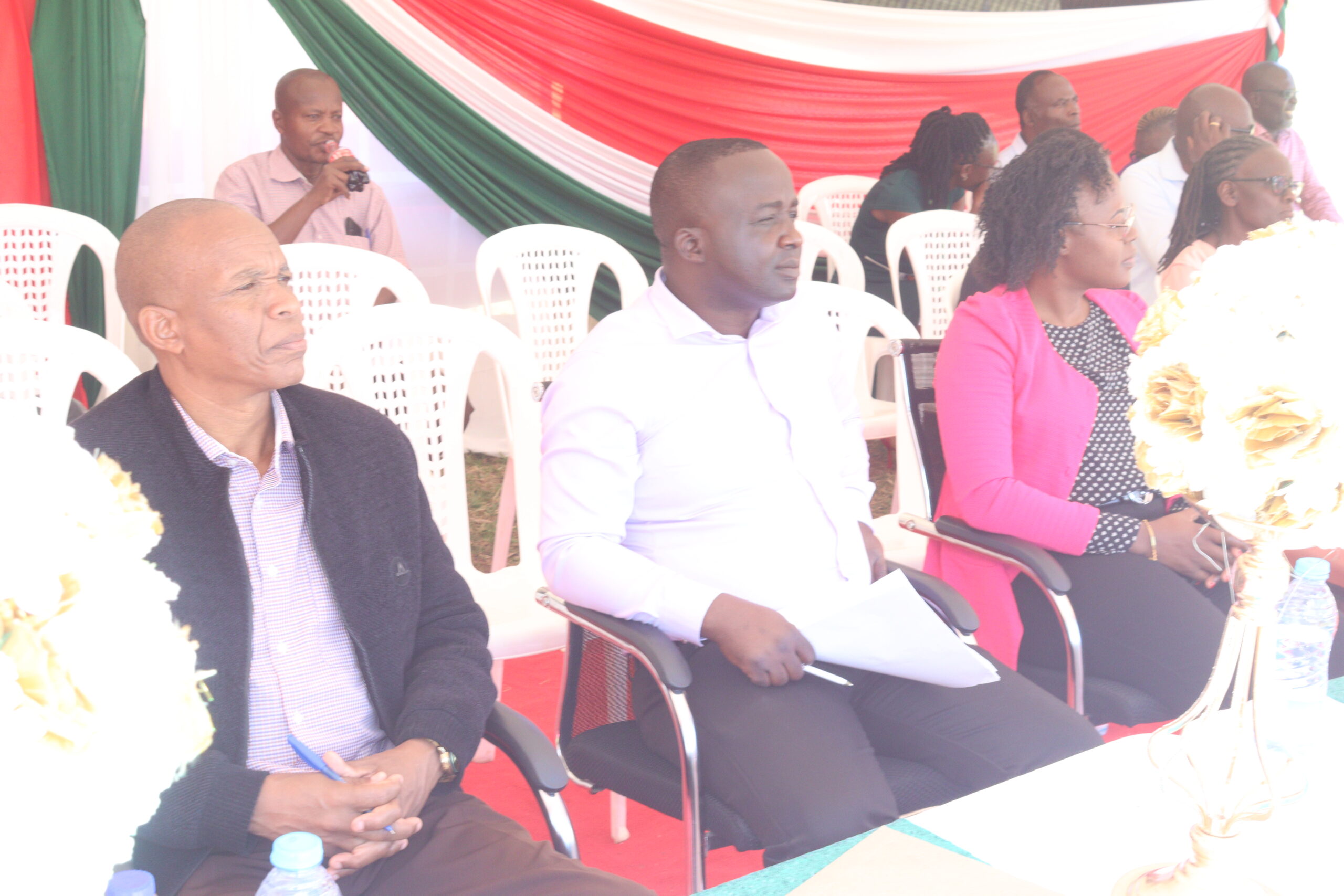
The HIV/Aids prevalence has slightly dropped in Bungoma County according to 2023/24 statistics.
According to Statistics, people contracting the disease dropped from 2.3 percent in 2023 to 1.7 in 2024.
Speaking during the marking of World AIDS Day, the Bungoma County Health and Sanitation CECM CPA Chrispinus Barasa called on the area residents to stop any behaviour which could ignite the disease prevalence.
“This is a moment when we honour the lives lost to AIDS, celebrate the resilience of those living with HIV, and reaffirm our collective responsibility to end the epidemic in our generation, Bungoma County, like many others in Kenya, has made strides in responding to HIV,” he said.
According to the 2024 county report, our overall HIV prevalence stands at 1.78 %. While this prevalence may be lower than many counties, it remains a stark reminder that thousands of our sisters and brothers continue to live with HIV and need our ongoing support, compassion, and focused interventions.
However, he stated that the challenge remains substantial. In recent years, our county has recorded worrying trends in new HIV infections, teenage pregnancies, and gender-based violence; the so-called “triple threat” that disproportionately affects our youth.
Represented by the CDH Dr.Caleb Watta, the CECM stated that in 2024, the county reported 679 new HIV infections.
“Women are bearing a heavier burden: the 2024 data show HIV prevalence among women at 2.53%, compared with 1.01% among men,” said CPA Barasa.
At the same time he said that teenage pregnancies remain significant. These are not just numbers, they represent our mothers, fathers, sons, daughters, our neighbours, colleagues, friends, our future.
Despite these serious concerns, Bungoma has also shown commitment. We have embraced evidence-based and community-driven responses.
The county has rolled out sensitization efforts targeting adolescents, supported by the NSDCC and partners, aiming to integrate HIV prevention, GBV response, and reproductive health services.
“We have also taken steps towards mainstreaming gender in our county policies. In late 2024, Bungoma adopted a gender-mainstreaming policy aimed at preventing violence, promoting safety and equal opportunity, and ensuring survivors of GBV receive support and justice,” he said.
He added, “But we cannot afford complacency. The triple threat of HIV, teenage pregnancies, and GBV remains very real, particularly for young people,”.
As the county Executive Committee Member, I want to state clearly: we cannot end AIDS without addressing the social drivers that continue to put our children and young people at risk.
This means strengthening prevention, scaling up comprehensive sexuality education, expanding youth-friendly services, and ensuring that every survivor of gender-based violence receives immediate care and justice.
It means keeping girls in school and ensuring boys grow up in communities that reject violence and harmful gender norms. It means mobilizing parents, teachers, faith leaders, and the entire community to act.
Barasa said, “World AIDS Day reminds us that progress is possible but only when we act together. I therefore call upon all residents of Bungoma: let us end stigma, support those living with HIV, stand with survivors of violence, protect our children’s health and dignity, and safeguard the future of every adolescent girl and boy in this county,”.
Ending AIDS and ending the triple threat by 2030 is not just a slogan; it is an achievable goal if we remain focused, united, and committed.
Present were the deputy County director of health Dr. Emma Nyaboke, County health management team (CHMT), senior health workers and partners.

