



By Duncan Waswa | Bungoma County
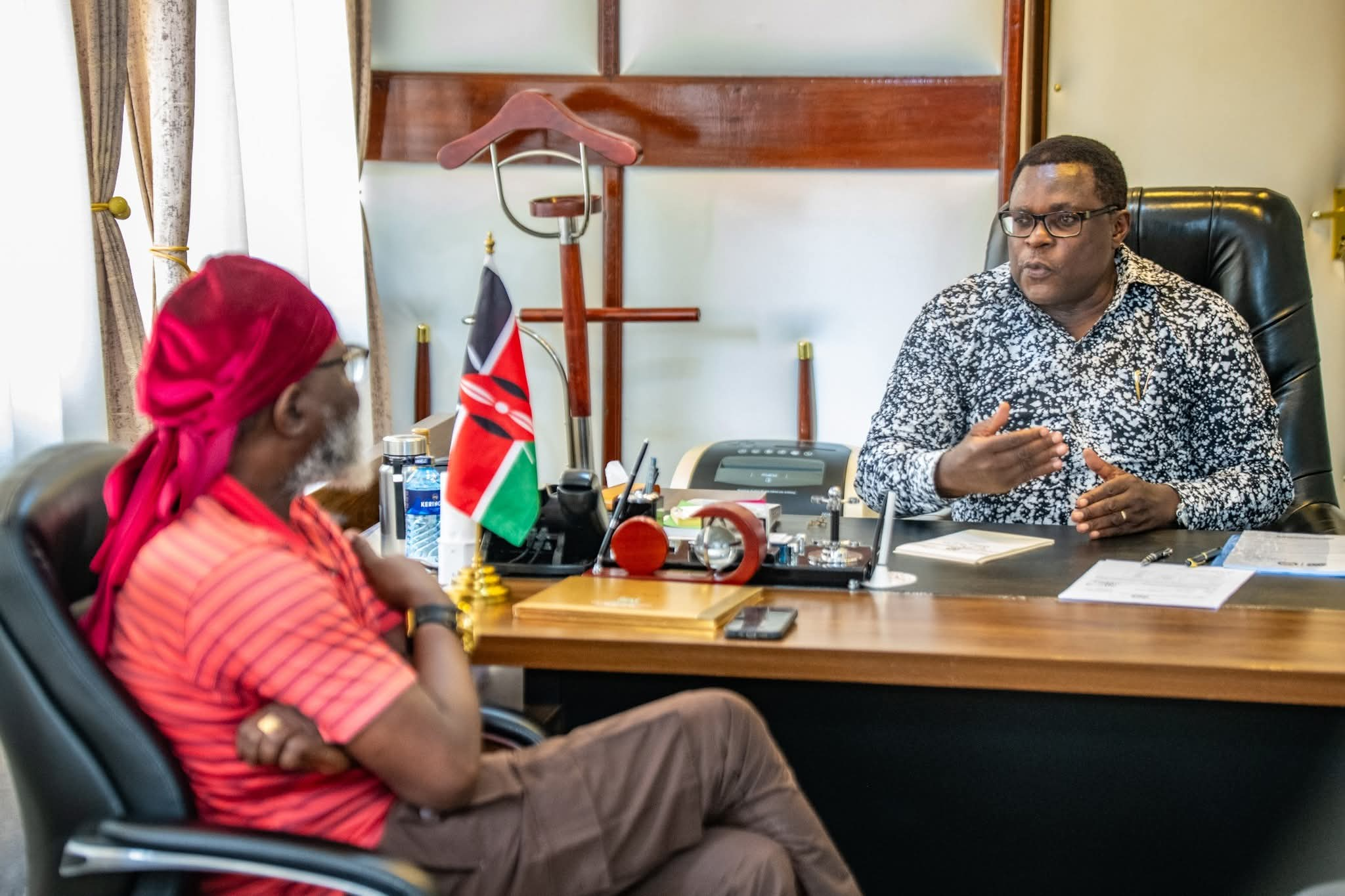
Bungoma Governor Kenneth Lusaka has ignited a fresh political conversation in Western Kenya after hosting Roots Party leader and former presidential aspirant Professor George Wajackoyah, in a meeting aimed at uniting the Luhya nation ahead of the 2027 general elections.
The two leaders, who met in Bungoma on Monday, emphasized the urgent need for unity within the Luhya community, saying that the region has for far too long remained politically divided — costing it valuable opportunities at the national decision-making table.
Governor Lusaka, a seasoned politician and former Senate Speaker, said the time had come for like-minded leaders from the region to rise above personal and party differences and instead focus on forging a common front for the Luhya community.
“We cannot continue insulting each other in funerals and public rallies and expect to be taken seriously as a community. That behavior has not helped us, and it will never help us,” said Lusaka.
He emphasized the need for leaders to engage in strategic dialogue and build a clear roadmap that will empower the Mulembe Nation politically and economically. According to Lusaka, what the Luhya community lacks is not numbers, but a united voice and a plan.
“We have the numbers, we have the brains, and we have the resources — what we lack is unity and strategy,” he added.
Professor Wajackoyah echoed Lusaka’s sentiments, noting that the Luhya community is one of the most educated and politically active in the country, yet continues to play a peripheral role in national leadership due to disunity.
“We are everywhere — in law, medicine, education, farming, and even in politics — but when it comes to power sharing and national representation, we are nowhere near the center.That must change,” said the Roots Party leader.
Wajackoyah, who ran for president in 2022 under a radical reform agenda that included the legalization of marijuana and export of snake venom, said that despite their different ideological paths, Luhya leaders must find common ground for the sake of the community.
He expressed confidence in Governor Lusaka’s leadership and political experience, saying Lusaka was well placed to bring together various leaders and stakeholders from the region to chart a new political course.
“He has the credibility, the track record, and the respect of many across party lines. If anyone can call a serious meeting of Luhya leaders and make them listen to each other, it is Kenneth Lusaka,” he stated.
With less than two years to the next general elections, the Luhya vote bloc — often referred to as the “Mulembe Nation” — remains a key battleground that presidential hopefuls are already eyeing.
In 2022, the region’s vote was split among several coalitions, with some supporting President William Ruto’s Kenya Kwanza alliance while others backed Raila Odinga’s Azimio la Umoja.
This political fragmentation, analysts say, continues to weaken the region’s bargaining power. Past efforts to unite the community under one political party or presidential candidate have faced setbacks due to personal rivalries, party loyalties, and lack of consensus on leadership.
Political observers argue that any serious attempt to consolidate the region’s political voice will require not just unity declarations, but also structured conversations that include youth, women, religious leaders, and civil society.
Lusaka and Wajackoyah are calling for an inclusive, structured approach that focuses not just on politics, but also on addressing the socio-economic challenges facing the Western region — including unemployment, poverty, poor infrastructure, and underdeveloped agriculture.
“Let’s stop making unity a seasonal slogan during elections,” Lusaka urged. “Let’s make it a long-term strategy that addresses our people’s problems and brings real change.”
They proposed the formation of a non-partisan forum of Luhya leaders, opinion shapers, and professionals to meet regularly and develop a blueprint for the region’s growth and representation.
“Unity doesn’t mean we all join one party,” said Wajackoyah. “It means we agree on what is best for our people and use our different platforms to push that agenda.”
The duo’s sentiments come at a time when national political realignments are already underway, with speculation rife that several leaders in the current administration and opposition will be seeking new alliances ahead of the 2027 polls.
It remains to be seen whether other key leaders from the Luhya community — such as Prime Cabinet Secretary Musalia Mudavadi, National Assembly Speaker Moses Wetang’ula, Kakamega Governor Fernandes Barasa, and others — will support the Lusaka-Wajackoyah unity initiative.
In recent months, several calls have been made by civil society groups and political analysts urging the region’s top leaders to put aside their personal ambitions and focus on building a unified agenda for Western Kenya.
If the Lusaka-Wajackoyah meeting is any indication, the road to 2027 could see renewed efforts to reposition the Mulembe Nation not just as a voting bloc, but as a decisive voice in national leadership.
“This is not just about 2027,” Lusaka concluded. “It is about reclaiming our voice and charting our future — together.”

